
Securing a fantastic dining experience shouldn’t break the bank, and it doesn’t have to! Last-minute restaurant deals offer a compelling opportunity for both savvy diners and establishments looking to maximize their occupancy. This exploration delves into the world of these spontaneous savings, examining the benefits for consumers and restaurants alike, and providing practical guidance on how to find and utilize these often-hidden gems.
From understanding the various types of deals available – discounts, special menus, or happy hour specials – to leveraging online platforms and social media for discovery, this guide provides a comprehensive overview. We’ll also address the strategic implications for restaurants, including data-driven optimization and the potential challenges involved in implementing effective last-minute deal strategies.
Understanding “Last-Minute Restaurant Deals”
Last-minute restaurant deals offer a compelling proposition for both diners and establishments. They represent a mutually beneficial strategy that can significantly impact both customer satisfaction and restaurant profitability. These deals leverage the inherent flexibility and often-unused capacity of restaurants, transforming potential losses into opportunities for increased revenue and customer acquisition.Last-minute restaurant deals are attractive to consumers primarily due to their potential for significant savings and the spontaneity they introduce to dining experiences.
They provide an incentive to try new restaurants or revisit favorites, especially during times when a person might otherwise stay home. The element of surprise and the opportunity for a discounted meal makes these deals particularly appealing.
Types of Last-Minute Restaurant Deals
Restaurants employ a variety of strategies to attract last-minute diners. These offers often depend on the restaurant’s type, location, and target audience. Common examples include percentage-based discounts on the total bill, fixed-price menus offering a curated selection of dishes at a reduced cost, and extended happy hour deals that feature discounted drinks and appetizers beyond the usual timeframe. Some restaurants might even offer special prix fixe menus for specific days or times to clear out inventory or promote new dishes.
Others may partner with online platforms to offer exclusive last-minute deals only accessible through their apps or websites.
Benefits for Restaurants Offering Last-Minute Deals
The primary benefit for restaurants is the increased occupancy rate, particularly during traditionally slower periods. Empty tables represent lost revenue, and last-minute deals help to fill these gaps. By offering incentives, restaurants can attract customers who might otherwise choose to dine elsewhere or cook at home. This can lead to increased revenue, especially during weekdays or off-peak hours.
Furthermore, these deals can help to boost brand awareness and attract new customers who might become repeat patrons. Finally, using last-minute deals to clear out excess inventory (like perishable ingredients) helps minimize waste and improve profit margins.
Pros and Cons of Last-Minute Deals
| Feature | Restaurants: Pros | Restaurants: Cons | Customers: Pros | Customers: Cons |
|---|---|---|---|---|
| Revenue | Increased revenue during slow periods | Potentially lower profit margins per customer | Significant cost savings | Limited menu choices (sometimes) |
| Occupancy | Higher table turnover rates | Potential for increased staff workload during peak times | Access to restaurants that might otherwise be too expensive | May require flexibility in dining time |
| Marketing | Improved brand awareness and customer acquisition | Requires effective marketing and promotion strategies | Discovery of new restaurants and cuisines | Deals may not always be available or suitable |
| Inventory | Reduced food waste | Potential for over-ordering if deals are too successful | Opportunity for spontaneous dining experiences | Limited availability and potentially shorter dining window |
Finding Last-Minute Restaurant Deals
Securing a last-minute restaurant reservation with a great deal can be surprisingly easy with the right approach. Many platforms and strategies exist to help both diners and restaurants find mutually beneficial arrangements. This section explores the methods available for discovering and booking these advantageous deals.
Several online platforms and apps specialize in connecting diners with last-minute restaurant deals. These platforms often work by partnering with restaurants to fill empty tables, offering discounted prices or special promotions to incentivize bookings. This benefits both the restaurant (increased revenue) and the customer (discounted meals).
Popular Online Platforms and Apps for Last-Minute Restaurant Deals
A variety of websites and apps offer last-minute restaurant deals. These platforms vary in their features and the types of restaurants they partner with, so exploring a few options is often worthwhile.
- OpenTable: Often features “Last Minute” or “Deals” sections highlighting restaurants with available reservations and special offers.
- Resy: Similar to OpenTable, Resy frequently promotes last-minute availability and potential deals from partnered restaurants.
- Tock: This platform focuses on higher-end dining experiences and sometimes offers last-minute deals to fill tables.
- Groupon/LivingSocial: While not exclusively focused on last-minute deals, these sites frequently offer discounted restaurant vouchers, some of which are available for immediate use.
- Restaurant’s Own Websites and Apps: Many restaurants directly advertise last-minute deals on their own websites or mobile apps.
Effective Marketing Strategies Restaurants Employ for Last-Minute Deals
Restaurants utilize a range of marketing tactics to promote last-minute deals and fill empty tables. These strategies often leverage the urgency and scarcity of the offer to drive bookings.
- Flash Sales and Time-Limited Offers: Creating a sense of urgency by offering deals only for a limited time encourages immediate bookings.
- Discount Codes and Promotional Emails: Restaurants send targeted emails to their mailing lists offering exclusive last-minute discounts.
- Social Media Contests and Giveaways: Running contests or giveaways on platforms like Instagram or Facebook can generate excitement and drive traffic to their booking systems.
- Partnerships with Local Businesses: Collaborating with hotels or other businesses to offer bundled deals can increase visibility and attract new customers.
- Loyalty Programs: Rewarding repeat customers with exclusive last-minute deals fosters customer loyalty and encourages frequent visits.
The Role of Social Media in Advertising and Discovering Last-Minute Deals
Social media platforms play a crucial role in both advertising and discovering last-minute restaurant deals. Restaurants use social media to directly reach potential customers, while diners can find deals through targeted searches and community recommendations.
Restaurants frequently utilize Instagram, Facebook, and Twitter to announce last-minute deals, often accompanied by visually appealing photos and videos of their food. Diners can follow their favorite restaurants or use relevant hashtags (e.g., #lastminutedeals, #restaurantdeals) to discover deals in their area. Social media also allows for quick engagement and real-time responses to customer inquiries regarding availability and deals.
Step-by-Step Guide to Finding and Booking Last-Minute Restaurant Deals
Finding and booking a last-minute restaurant deal involves a straightforward process. Following these steps increases your chances of success.
- Identify your desired location and cuisine: Determine the area and type of food you’re looking for.
- Check popular online platforms: Browse websites and apps like OpenTable, Resy, Tock, Groupon, and the restaurant’s own website.
- Filter by date and time: Specify your desired date and time to see available last-minute reservations.
- Review deals and promotions: Carefully examine any discounts or special offers listed.
- Read reviews and check menus: Ensure the restaurant aligns with your preferences.
- Book your reservation: Once you’ve found a suitable deal, complete the booking process through the chosen platform.
- Confirm your reservation: Verify your reservation details and any special instructions.
Types of Last-Minute Restaurant Deals
Last-minute restaurant deals offer diners the chance to enjoy delicious meals at significantly reduced prices or with added value. These deals, often appearing on various online platforms or directly from restaurants, cater to different preferences and dining occasions. Understanding the various types of deals available can help you maximize your savings and dining experience.Last-minute restaurant deals are categorized based on the type of discount offered and the overall structure of the deal.
These variations influence their appeal to different customer segments and the overall value proposition for both the diner and the restaurant. Factors such as the restaurant’s popularity, day of the week, and time of day all play a significant role in shaping the deals offered.
Percentage Discounts
Percentage discounts offer a straightforward reduction on the total bill. For instance, a restaurant might offer a 20% discount on all food items during off-peak hours. This type of deal is easily understood and appealing to a broad range of customers. The value proposition is directly tied to the size of the bill; larger bills result in larger savings.
The availability of percentage discounts is often influenced by the restaurant’s occupancy rate; a quieter evening might prompt a larger discount to incentivize diners. Restaurants typically utilize this strategy to fill empty tables during slower periods.
Fixed-Price Menus
Fixed-price menus offer a set meal at a predetermined price. This might include a starter, main course, and dessert for a significantly lower price than ordering each item individually. This deal type provides excellent value when the fixed price is lower than the à la carte price. The restaurant benefits by increasing their average order value and managing inventory more effectively.
The availability of fixed-price menus can be influenced by the seasonality of ingredients or special events. For example, a restaurant might offer a fixed-price Thanksgiving menu with limited availability.
Bonus Offers
Bonus offers go beyond simple discounts and add extra value to the dining experience. These might include a free appetizer with an entree, a complimentary drink, or a discount on a future visit. This type of deal aims to enhance customer loyalty and encourage repeat business. The value proposition lies in the added extras, offering a more luxurious experience for the same or slightly higher price.
Availability depends on the restaurant’s marketing strategy and the availability of promotional items. For instance, a restaurant might offer a free bottle of wine with a specific entree on a particular day to promote a new wine selection.
Types of Last-Minute Restaurant Deals and Their Typical Features
The following list Artikels different types of last-minute restaurant deals and their typical features:
- Percentage Discounts: A fixed percentage off the total bill. Often used to fill empty tables during slower periods. Value proposition is directly proportional to the bill amount.
- Fixed-Price Menus: A set menu at a predetermined price. Offers excellent value when the fixed price is significantly lower than ordering à la carte. Useful for inventory management and increased average order value.
- Bonus Offers: Includes additional perks such as free appetizers, complimentary drinks, or discounts on future visits. Aimed at increasing customer loyalty and repeat business. Value proposition lies in the added extras.
- Flash Sales: Time-limited discounts or deals, often offered through online platforms. These deals have a high sense of urgency and attract deal-seekers.
- Happy Hour Specials: Discounted drinks and sometimes food offered during specific hours. A common strategy to boost early evening sales.
The Impact of LAST-MINUTE DEALS on the Restaurant Industry
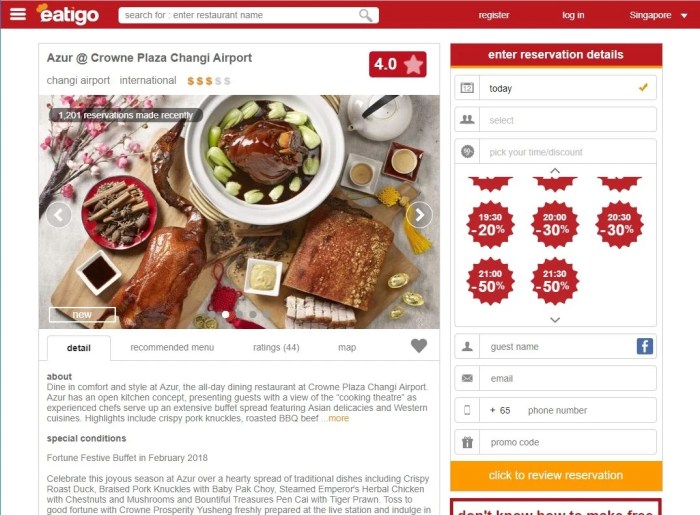
Last-minute restaurant deals significantly impact the industry, influencing profitability, customer relationships, and operational efficiency. By strategically offering these deals, restaurants can fill empty tables, increase revenue during slower periods, and cultivate a loyal customer base. However, successful implementation requires careful planning and consideration of potential challenges.The use of data analytics plays a crucial role in optimizing last-minute deal offerings.
Restaurants leverage historical sales data, customer preferences, and real-time information on table availability to predict demand and tailor their deals accordingly. This data-driven approach ensures that deals are offered at the right time, for the right price, and to the right audience, maximizing their impact.
Data Analytics in Optimizing Last-Minute Deals
Restaurants utilize sophisticated point-of-sale (POS) systems and customer relationship management (CRM) software to gather and analyze data. For example, a restaurant might analyze historical data to identify days and times with consistently low occupancy. They could then create targeted last-minute deals specifically for those periods, incentivizing diners to book tables during traditionally slower hours. Further, analyzing customer purchase history allows them to personalize offers, perhaps offering a discount on a customer’s favorite dish during a slow period.
This targeted approach maximizes the effectiveness of the deals and improves customer satisfaction.
Challenges in Implementing Last-Minute Deal Strategies
Implementing last-minute deal strategies presents several operational challenges. Managing inventory is crucial; restaurants need to ensure they have enough ingredients to fulfill the increased demand generated by the deals without compromising food quality or incurring excessive waste. Staffing levels also require careful consideration. Sudden surges in customers due to successful deals can strain kitchen and service staff, potentially impacting the quality of the dining experience.
Effective scheduling and efficient communication within the restaurant team are essential to mitigate these challenges.
Building Customer Loyalty and Brand Reputation
Last-minute deals can be a powerful tool for building customer loyalty and enhancing brand reputation. By offering attractive discounts and promotions, restaurants attract new customers and encourage repeat visits. Positive experiences resulting from these deals can lead to positive word-of-mouth marketing and increased online reviews, further boosting the restaurant’s reputation. Consistent delivery of high-quality food and service, even during periods of high demand due to successful last-minute deals, is vital for building long-term customer loyalty.
Hypothetical Scenario: Successful Last-Minute Deal Campaign
Imagine “The Cozy Corner Cafe,” a small Italian restaurant, experiencing consistently low occupancy on Tuesday evenings. They implement a last-minute deal offering a 25% discount on all appetizers and entrees between 5 pm and 7 pm on Tuesdays, promoted through their social media channels and email list. This targeted campaign results in a 40% increase in reservations on Tuesday evenings.
Assuming an average order value of $30 per person and an average of 20 additional customers per Tuesday, the increase in revenue is $240 per Tuesday (20 customers x $30 x 0.25 discount x 1.25 revenue multiplier). Over a month (four Tuesdays), this translates to an additional $960 in revenue, significantly impacting profitability. The success of this campaign also reinforces the restaurant’s positive brand image and encourages repeat business from new and existing customers.
Visual Representation of Last-Minute Restaurant Deals
Effective visual communication is crucial for attracting customers to last-minute restaurant deals. A well-designed infographic or promotional image can quickly convey the value proposition and entice potential diners. The key is to create visually appealing and easily digestible content that highlights the urgency and benefits of the offer.A visually appealing infographic should leverage color psychology and clear data representation to effectively communicate the key elements of a last-minute restaurant deal.
Infographic Design for Last-Minute Restaurant Deals
The infographic could use a vibrant color palette, perhaps incorporating warm, appetizing colors like oranges and yellows to evoke feelings of warmth and delicious food, contrasted with a cool, calming blue or green to represent the refreshing aspect of a spontaneous dining experience. A clean, modern sans-serif font like Open Sans or Montserrat would ensure readability. Data could be presented using a combination of charts and icons.
For example, a pie chart could illustrate the percentage discount offered, while icons could represent key features of the deal, such as free drinks or appetizers. A clear, concise headline such as “Last-Minute Dining Deals: Up to 50% Off!” would immediately grab attention. The infographic should be visually structured with clear sections, using whitespace effectively to avoid a cluttered appearance.
Data points, like the discount percentage and time limitations, should be prominently displayed using bold fonts or contrasting colors.
Promotional Image Design for a Hypothetical Last-Minute Restaurant Deal
Imagine a promotional image for a hypothetical last-minute deal at an Italian restaurant. The image could feature a close-up shot of a steaming plate of pasta carbonara, with perfectly cooked pasta, creamy sauce, and crispy pancetta visible. The background could be slightly blurred to keep the focus on the food. The overall mood should be warm and inviting, suggesting a comforting and delicious dining experience.
The restaurant’s logo could be subtly incorporated in a corner, and text overlaying the image could read “Last Minute Pasta Paradise! 40% Off Tonight Only!” The font should be elegant and easy to read, possibly a serif font like Playfair Display or Lora, to complement the sophisticated feel of the Italian cuisine. The colors used should align with the restaurant’s branding, but generally warm tones would be appropriate.
A subtle texture, like a slightly faded background or a woodgrain effect, could add a touch of rustic charm. The overall composition should be balanced and aesthetically pleasing, creating a sense of urgency and enticing the viewer to take advantage of the offer immediately.
In conclusion, last-minute restaurant deals present a win-win scenario. Consumers enjoy significant savings and exciting culinary adventures, while restaurants effectively manage capacity, increase revenue, and potentially cultivate lasting customer loyalty. By understanding the dynamics of these deals and utilizing the resources and strategies Artikeld in this guide, both parties can maximize the benefits of this mutually advantageous approach to dining.
Common Queries
Are last-minute deals always available?
No, availability varies depending on the restaurant, day of the week, and time of day. Check online platforms or contact the restaurant directly.
Can I use last-minute deals with large groups?
It depends on the restaurant’s policy. Some may have restrictions on group size for last-minute deals. Always confirm beforehand.
Do I need a code for last-minute deals?
Sometimes, but not always. Some deals are automatically applied at checkout, while others may require a code. Check the details on the platform or restaurant website.


